
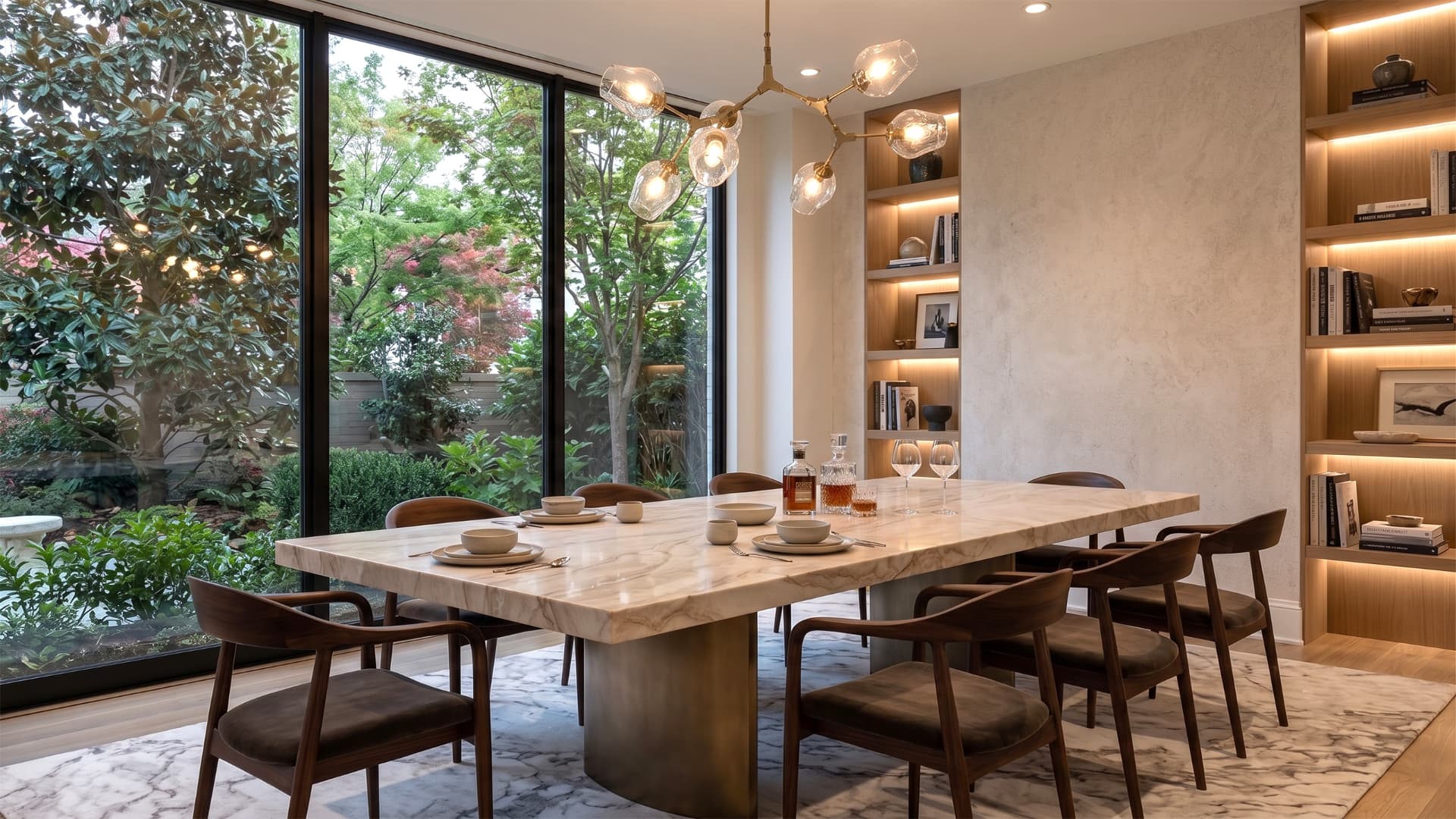
Taj Mahal quartzite is often admired for its warm, quiet movement. While many clients first encounter it as a countertop material, its design potential reaches further. The softness of its tone and the restraint of its veining make it useful in spaces where natural stone should feel refined, calm, and integrated.
Rather than treating Taj Mahal quartzite as a single-purpose surface, designers can use it to create continuity across multiple parts of an interior. Its warmth allows it to move from functional surfaces into more decorative and architectural applications without feeling excessive.
1. Bathroom Vanities
Taj Mahal quartzite can bring warmth to bathrooms that might otherwise feel too cool or clinical. Its creamy background and gentle movement work well with soft white cabinetry, wood vanities, plaster walls, and warm metal fixtures.
For primary bathrooms, the material can create a calm and elevated tone. For powder rooms, it can provide enough natural movement to feel special without becoming too dramatic.
Best design approach:
- Pair with warm lighting.
- Use simple fixtures to keep the surface refined.
- Consider a full-height backsplash for added continuity.
- Let the stone soften cooler tile or wall finishes.
2. Bar Surfaces
Bars are a natural place for a material with quiet richness. Taj Mahal quartzite works well for home bars, lounge spaces, hospitality bars, and entertainment areas because it feels polished without becoming overly formal.
Its soft movement can support layered lighting, dark millwork, glass shelving, and metal accents. It can also help a bar feel more inviting than a colder or more highly contrasted stone.
Best design approach:
- Pair with dark cabinetry for contrast.
- Use brass, bronze, or warm nickel accents.
- Add lighting that reveals the stone's depth.
- Keep the surrounding finishes clean so the surface remains the focus.
3. Fireplace Details
Taj Mahal quartzite can be used around fireplaces when the design needs a softer architectural statement. It does not create the same drama as a heavily veined Italian marble, but that is part of its strength.
In living rooms, bedrooms, and lounge spaces, it can frame the fireplace with warmth and quiet structure. The result feels refined, but not overly decorative.
Best design approach:
- Use the stone when the fireplace needs to feel calm and integrated.
- Pair with plaster, wood, or neutral wall finishes.
- Keep the surrounding mantel or millwork simple.
- Let the material add depth without overpowering the room.
4. Custom Table Tops
Taj Mahal quartzite can work beautifully as a furniture surface. Dining tables, coffee tables, console tables, and side tables can all benefit from the stone's natural movement.
As a table top, the material becomes more intimate. It is seen up close, touched often, and experienced as part of daily living. This makes its subtle veining and warmth especially valuable.
Best design approach:
- Use simple bases that do not compete with the stone.
- Pair with wood, metal, or sculptural supports.
- Choose the slab based on movement and proportion.
- Let the table become a quiet focal point.
5. Accent Walls and Surface Details
Taj Mahal quartzite can also be used for accent surfaces where the goal is depth rather than drama. It can bring natural texture to a wall, niche, or built-in feature without the bold contrast of more expressive stone.
For projects that need a restrained luxury material, this can be highly effective.
Best design approach:
- Use larger pieces where possible to show movement.
- Place the stone where lighting can reveal its texture.
- Keep adjacent materials soft and neutral.
- Use it as a bridge between architectural elements.
6. Coordinated Interior Palettes
One of the strongest uses for Taj Mahal quartzite is as part of a coordinated material palette. Because the stone is warm and versatile, it can connect multiple spaces without making the design feel repetitive.
For example, it may appear as a vanity surface in one room, a bar top in another, and a table surface elsewhere. Each use can feel distinct, but the material language remains connected.
For additional material background, Geology.com explains that quartzite is a metamorphic rock formed from sandstone and is used as a decorative dimension stone in interior and architectural applications: Geology.com: Quartzite.
Related main article placeholder: [Taj Mahal Quartzite in Charlotte: A Warm, Refined Surface for Elevated Interiors]
Explore Taj Mahal Quartzite with Bottega Surfaces
Taj Mahal quartzite is valuable because it can support many design roles without losing its quiet elegance. It works beautifully in refined interiors where warmth, softness, and natural movement matter.
Schedule a Showroom Visit, Book an Online Inquiry, or View Stock to explore available Taj Mahal quartzite and natural stone selections.