
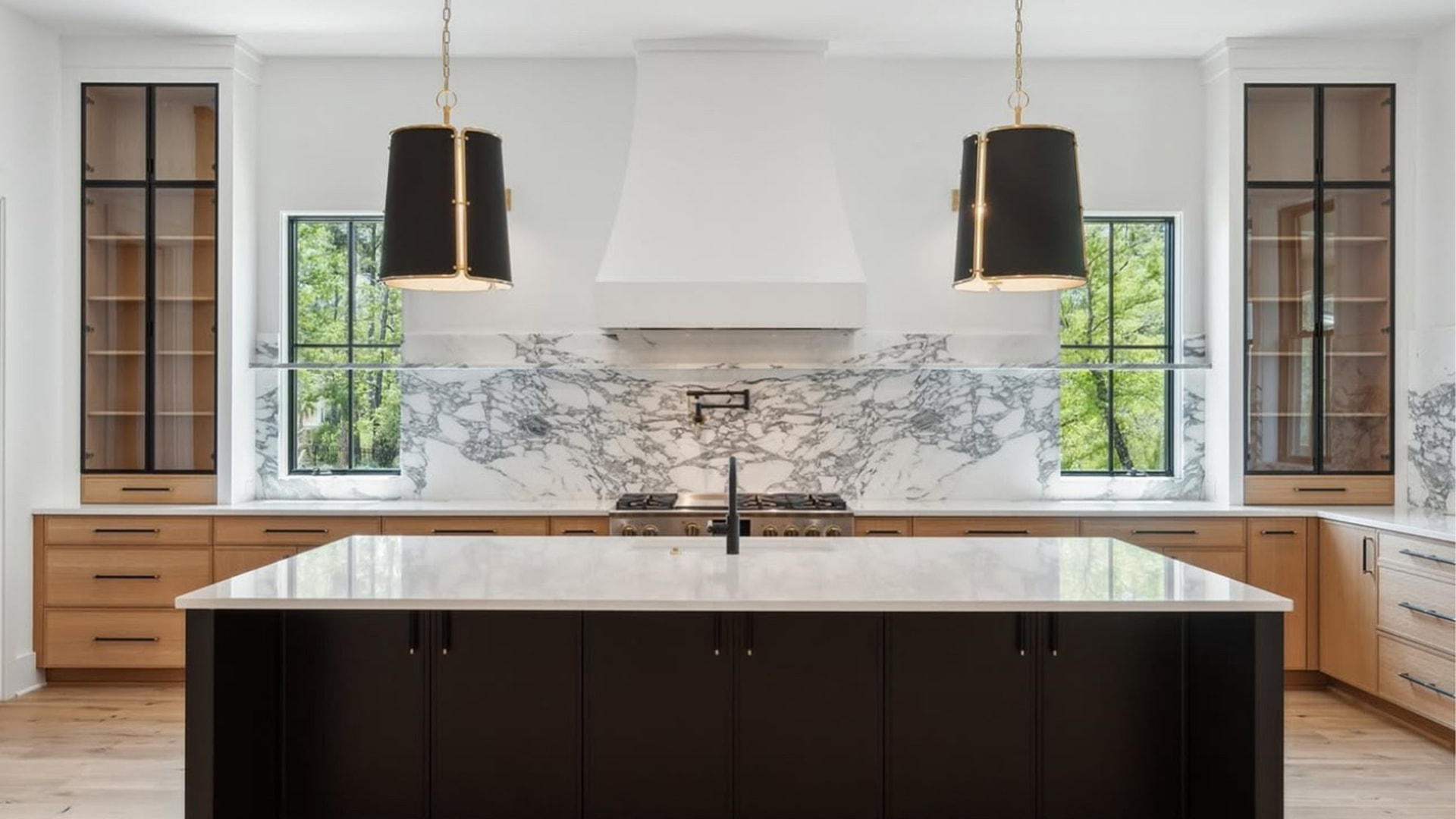
Italian marble can change the entire character of a room before any furniture, lighting, or styling is added. For designers, the question is not simply which stone looks beautiful. The better question is what kind of presence the marble should bring into the space.
Some Italian marble slabs create drama. Others bring softness. Some are chosen for movement, while others are selected for restraint. The right style depends on the room's scale, the surrounding materials, and the design mood the client wants to achieve.
For historical and regional context, Tuscany's marble landscape remains closely associated with Carrara and the Apuan Riviera, where marble quarrying has shaped the region's architectural identity for centuries. Visit Tuscany provides an overview of notable marble quarry sites in the area: 5 Marble Quarries to Visit in the Apuan Riviera.
1. Expressive Italian Marble for Bold Focal Points
Some rooms need a strong material moment. In these spaces, expressive marble can become the visual anchor.
Best used for:
- Kitchen islands
- Fireplace surrounds
- Powder room walls
- Bookmatched feature walls
- Bar fronts
- Statement table tops
Design effect: Expressive marble introduces energy, contrast, and personality. It is often used when the stone needs to feel intentional rather than subtle.
Material examples: Calacatta Viola marble can work beautifully in this category because of its bold contrast and artistic movement. Arabescato marble can also create a strong focal point, especially when its flowing veining is allowed to continue across a larger surface.
Best design pairing: Use simpler surrounding finishes so the marble has space to lead. Quiet cabinetry, restrained hardware, soft wall colors, and clean lighting can help the stone feel curated rather than busy.
2. Soft White Marble for Timeless Rooms
Not every statement needs to be dramatic. A quiet white marble can still define a room through refinement, light, and proportion.
Best used for:
- Primary bathroom vanities
- Kitchen countertops
- Fireplace surrounds
- Shower walls
- Traditional or transitional interiors
- Calm luxury spaces
Design effect: Soft white marble creates brightness and elegance without overwhelming the room. It works especially well when the design goal is balance, restraint, and long-term appeal.
Material examples: Statuario marble is often selected for its refined appearance and polished visual presence. Carrara-style marbles can feel softer and more understated, making them suitable for interiors where the stone should support the room rather than dominate it.
Best design pairing: Pair soft white marble with warm wood, brushed metal, soft white cabinetry, plaster walls, or natural textures. The result can feel elevated without becoming overly formal.
3. Flowing Marble for Movement and Continuity
Some Italian marble slabs are valued for their sense of motion. Instead of sharp contrast, these stones create rhythm across the surface.
Best used for:
- Long kitchen islands
- Full-height backsplashes
- Wall panels
- Fireplace walls
- Bathroom feature surfaces
- Large commercial focal areas
Design effect: Flowing marble helps guide the eye through a space. It can make a surface feel larger, more connected, and more architectural.
Material examples: Arabescato marble is especially effective when the goal is movement. Its veining can create a sense of direction across islands, walls, and larger slab applications.
Best design pairing: Let the veining direction inform the layout. In longer applications, the stone should feel like it has been placed with intention, not simply installed as a surface.
4. Darker Marble for Contrast and Depth
Darker marble styles bring weight and atmosphere into a room. These stones are often used when a project needs contrast, intimacy, or a more architectural edge.
Best used for:
- Fireplaces
- Bars
- Powder rooms
- Dining areas
- Hospitality interiors
- Feature walls
Design effect: Dark marble can make a room feel grounded and sophisticated. It can also add contrast against lighter cabinetry, pale flooring, or warm metal finishes.
Best design pairing: Darker stone works well with layered lighting. Wall sconces, concealed lighting, and warm ambient light can bring out the marble's depth without making the space feel heavy.
5. Bookmatched Marble for Architectural Impact
Bookmatching is one of the most striking ways to use Italian marble. It places two slabs beside each other so the veining mirrors across the surface.
Best used for:
- Feature walls
- Fireplace surrounds
- Hotel lobbies
- Luxury bathrooms
- Dining room walls
- Reception areas
Design effect: Bookmatched marble creates symmetry, movement, and a sense of intentional artistry. It works best when the wall or surface is large enough for the pattern to be fully appreciated.
Best design pairing: Keep adjacent details minimal. The bookmatched stone should be treated like an artwork within the architecture.
Choosing the Right Style
Before selecting Italian marble slabs, define the role of the material:
1. Should the marble become the main focal point?
2. Should it support a quiet and refined interior?
3. Should the veining create movement across the room?
4. Should the color add warmth, contrast, or softness?
5. Should the stone feel classic, sculptural, or contemporary?
The strongest selections come from matching the marble's personality to the project's design intent.
Related main article placeholder: [Italian Marble for Luxury Interiors: From Dramatic Veining to Timeless Stone Surfaces]
Explore Italian Marble with Bottega Surfaces
Bottega Surfaces offers a curated selection of Italian marble, quartzite, limestone, granite, and specialty natural stone for refined residential and commercial projects.
Schedule a Showroom Visit, Book an Online Inquiry, or View Stock to explore available natural stone selections.